
Case Study

A distribution deal can appear profitable until a discount and the cost of free incentive units are counted together. That was a scenario I identified while analysing the dashcam retailer’s proposed pricing: the combined offer could produce a negative margin. It was a finding in a pricing model, before the proposed prices were circulated.
The finding illustrates why selling more needs to be considered alongside the economics of the offer and the capacity to fulfil it. Pricing formed part of a wider review of products, the website, marketing and operations, connecting expansion decisions with the business behind them.
On this page
The project and my role
- Business
- the dashcam retailer: dashcam retail and distribution in Iraq.
- Period
- July–August 2024.
- My role
- Business analysis and commercial operations planning.
I began with diagnostic questions and requests for the available data to understand the products, customers, team and order workflow. I then brought the commercial, marketing and operating findings into one study so the owner could consider how the decisions affected one another.
The challenge: connected decisions in a small business
Product distribution introduces considerations beyond direct consumer sales: distributor pricing, margins, discounts, incentives, stock availability and after-sales policies. With a small team, assigning responsibilities also becomes part of a workable expansion plan.
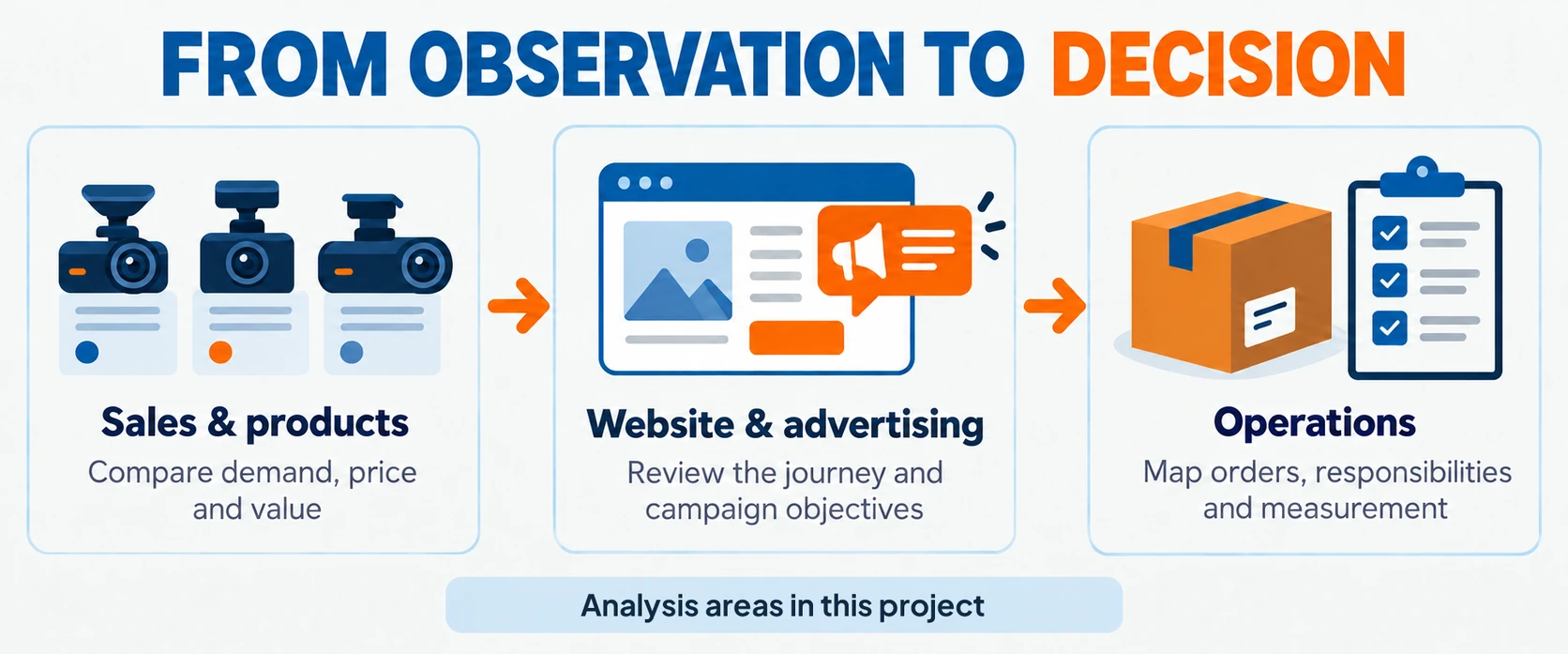
The review therefore covered product performance, distributor offers, the website experience, advertising objectives, and the process of receiving, preparing and shipping orders. It also considered sourcing, payment and shipping constraints and possible responses in the context of the project at the time.
The pricing finding: evaluate discounts and incentives together
The work included reviewing selling prices, costs, distributor margins, discounts and incentives. One area of focus was the combined effect of a price discount and free product units within the same offer.
The unit margin needed to be reassessed after including the cost of the incentive units. The calculations identified a scenario that could produce a negative margin. This made completing the review of the offer a priority before communicating prices to shops.
On 21 August 2024, I flagged that the proposed prices should not be shared with shops before the calculations were complete. The following day, I sent a separate, more detailed pricing analysis. The recommendation was to evaluate the commercial terms as a complete offer, accounting for the interaction between the discount and the incentive.
The practical question is how much value the business retains after accounting for the components of the deal. Discounts and incentives should therefore be evaluated together against their full cost. Other relevant operating costs also belong in an assessment of the deal’s profitability.
Use sales data to examine product priorities
I reviewed sales by product and month, identified stronger and weaker sellers, and compared selected products through price, specifications and customer value. This moved the discussion from identifying what sold to considering which products deserved focus and which needed a closer look at their presentation.
Sales volume provides a useful starting point, but it needs interpretation. Differences in demand may relate to price, features, availability or how a product is presented. I used the comparisons to develop directions for evaluation, while distinguishing the recorded sales from possible explanations for them.
This also connected product choices to marketing communication. Which benefits should the business emphasise? Which differences matter to a buyer comparing cameras? What information should the product page make easier to find? Those questions can guide both content and advertising.
Connect the website and advertising to the next customer action
I reviewed the website, user experience and product pages, compared the existing platform with a possible alternative, and proposed improvements to navigation, content and digital measurement.
The Instagram advertising review identified reliance on profile-visit campaigns. I recommended considering a broader mix of objectives, including those closer to an enquiry or purchase, depending on the readiness of the customer journey and measurement setup.
A profile visit can serve a defined purpose. Its value still needs to be assessed against the campaign’s goal. If the business wants suitable enquiries or purchases, it should examine what happens after the visit: whether customers find enough information, understand how to order, and have a clear next step that can be measured.
Plan order handling around the team’s capacity
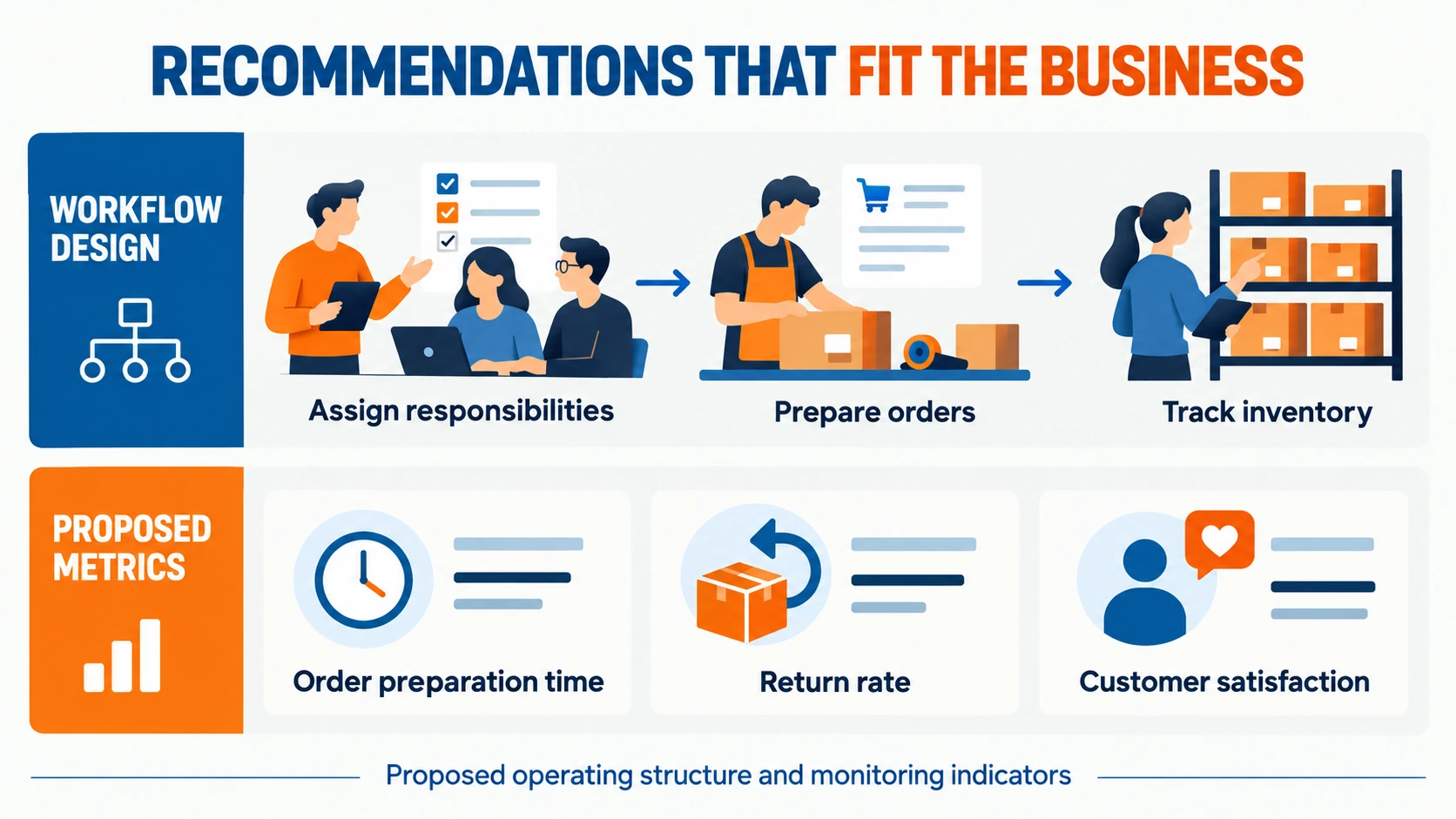
The study addressed responsibilities within the existing team and a future structure for gradual expansion. The proposed functions did not require an immediate hire for every role; one person could hold several responsibilities according to the workload.
Recommendations also covered receiving orders, preparation, packing, shipping handover and inventory monitoring. I proposed operating procedures and indicators such as order preparation time, return rate and customer satisfaction, alongside suggested warranty information, FAQs and after-sales arrangements.
Generating demand creates a need for a clear way to handle it. Content and advertising bring customers to the business, while the accuracy of the information, order preparation and follow-up shape the experience they receive.
What the business owner received
I brought the diagnosis, analysis, alternatives and recommendations into a 92-page planning study, accompanied by a separate pricing analysis. The deliverables covered:
- Product performance analysis and price–value comparisons.
- Pricing, discount and incentive review.
- Website, customer journey and digital marketing assessment.
- Proposals for team responsibilities, orders, inventory and shipping.
- Distribution and customer-service planning, with suggested procedures and monitoring indicators.
The purpose was to clarify the available choices and their commercial and operating requirements so the owner could assess them against priorities and resources. Some recommendations addressed the current setup; others provided a structure for a later stage.
Review the offer and its fulfilment before increasing demand
Sales volume alone does not establish whether a business is profitable. Before circulating a distributor offer, assess discounts, incentives and the relevant deal costs together. Before attracting more orders, review product information, team responsibilities and the capacity to prepare and follow up on those orders.
Increasing marketing spend may be appropriate, but its timing should fit the economics and operating readiness of the business. That review helps identify what needs attention first and what is ready for expansion.
For a practical starting point, read how to review your marketing before increasing your budget. To connect that review to focused choices, see how to build a marketing strategy for a small business.
Discuss your business situation and the challenge you want to understand.