
Ask whether ChatGPT or Gemini is better and two regular users may give opposite answers. One writes copy, the other works with documents, and their plans may differ. Their priorities are different too.
The more useful question is which assistant completes your task at the required quality with an acceptable amount of correction. This guide compares use cases and provides matched tasks you can try on your own accounts rather than claiming a universal winner.
ChatGPT and Gemini offer overlapping AI capabilities. Choose around the task, source material and features available in your plan, then compare accuracy, clarity and the work needed to finish the result.
On this page
Define what you are comparing
Record the product, plan, date and tools used. An answer without web search is a different setup from a sourced research task. Generating a picture also differs from editing a design file.
The official ChatGPT guide describes explanation, research and work with supplied material. Gemini’s overview introduces its assistant and related features. Verify account availability before making a capability part of your workflow.
Compare by type of work
| Area | ChatGPT | Gemini | Selection criterion |
|---|---|---|---|
| Writing and revision | Conversational drafting and refinement | Drafting and editing, including available Canvas tools | Meaning, voice and preserved facts |
| Current research | Web search when used | Research functions according to account and plan | Evidence, date and market relevance |
| Files and tables | Work with supplied material as supported | File handling and integrations as available | Extraction, calculations and usable export |
| Visual work | Check image features and plan | Check image tools and plan | Detail, revision control and rights |
This is a capability map, not a scored benchmark. Check ChatGPT plans, Gemini plans and Gemini Canvas for current details.
Keep the comparison fair
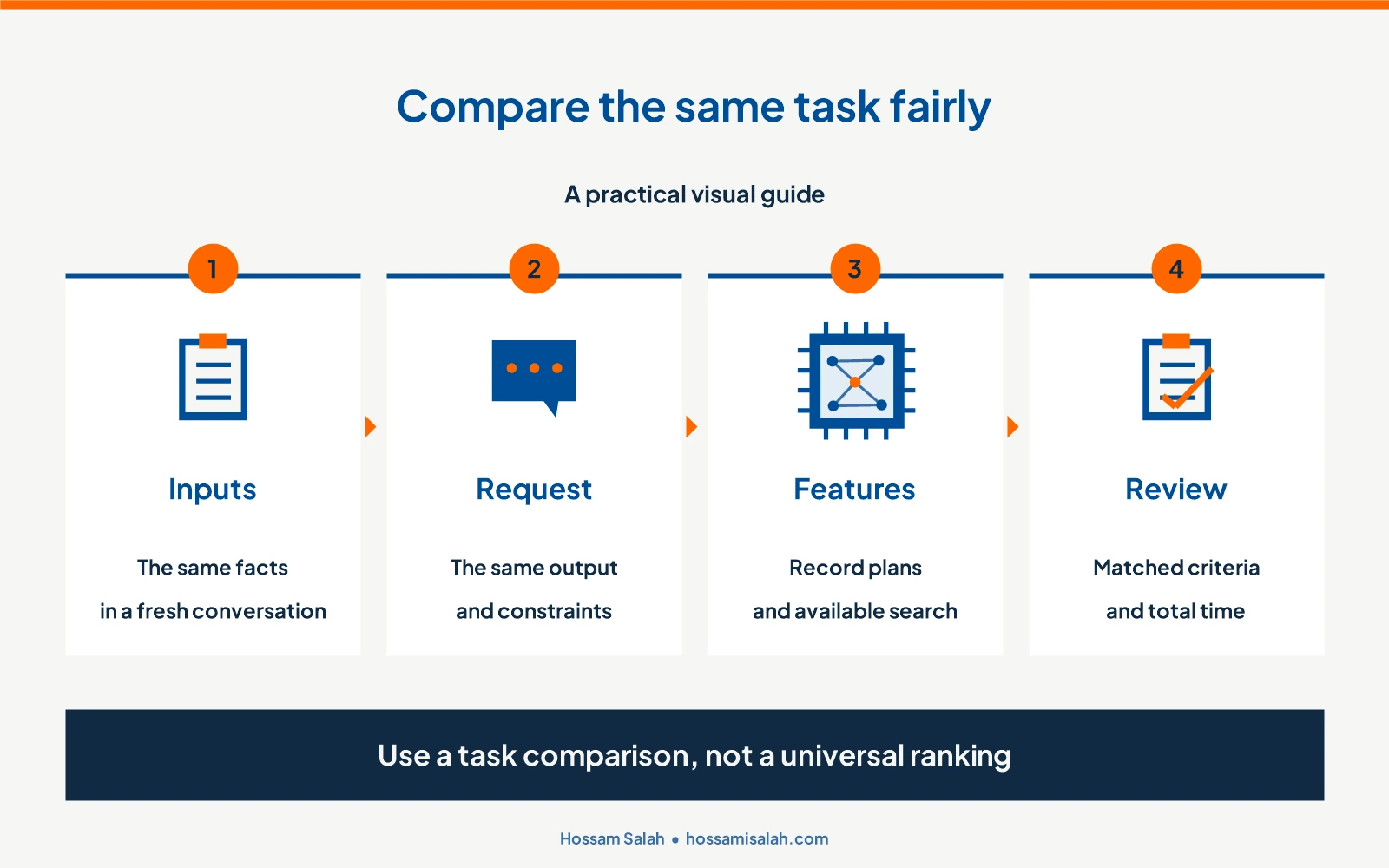
Provide the same information and request in a fresh conversation for each assistant. If the task needs search, use it in both where available. Record an unavailable feature as a plan limitation rather than an incorrect answer.
Save the first output and another after one specific revision. One assistant may produce a closer first draft while another responds better to feedback. Both affect total delivery time.
Task one: writing from fixed facts
Supply product or service details you know well. Request an 80–100-word description with an appropriate voice, preserving the specifications and adding no unsupported features.
Check accuracy, natural language and the amount of editing required. Record an invented warranty even if the remaining wording is attractive.
Use the same follow-up, such as “Shorten the introduction, begin with a use situation and preserve all specifications.” Check whether it changes the requested section without altering other facts.
Task two: a current fact with evidence
Choose a question with a clear official source, such as a tool’s export conditions. Request an answer with references, specifying country or account type when relevant.
Open the links. Does the source support the sentence? Is it about a current plan or an old announcement? A longer answer should not earn a higher score when its evidence is weaker. The official ChatGPT search guide explains that feature.
Task three: a small, checkable table
Use a non-sensitive sample with items, quantities and prices. Request line totals, a final total and identification of missing cells. Calculate a sample manually before comparing.
Check units, decimal separators and treatment of missing values. Also try moving the result into your normal editor. The display inside the conversation is not the entire delivery process.
Evaluate without a misleading universal score
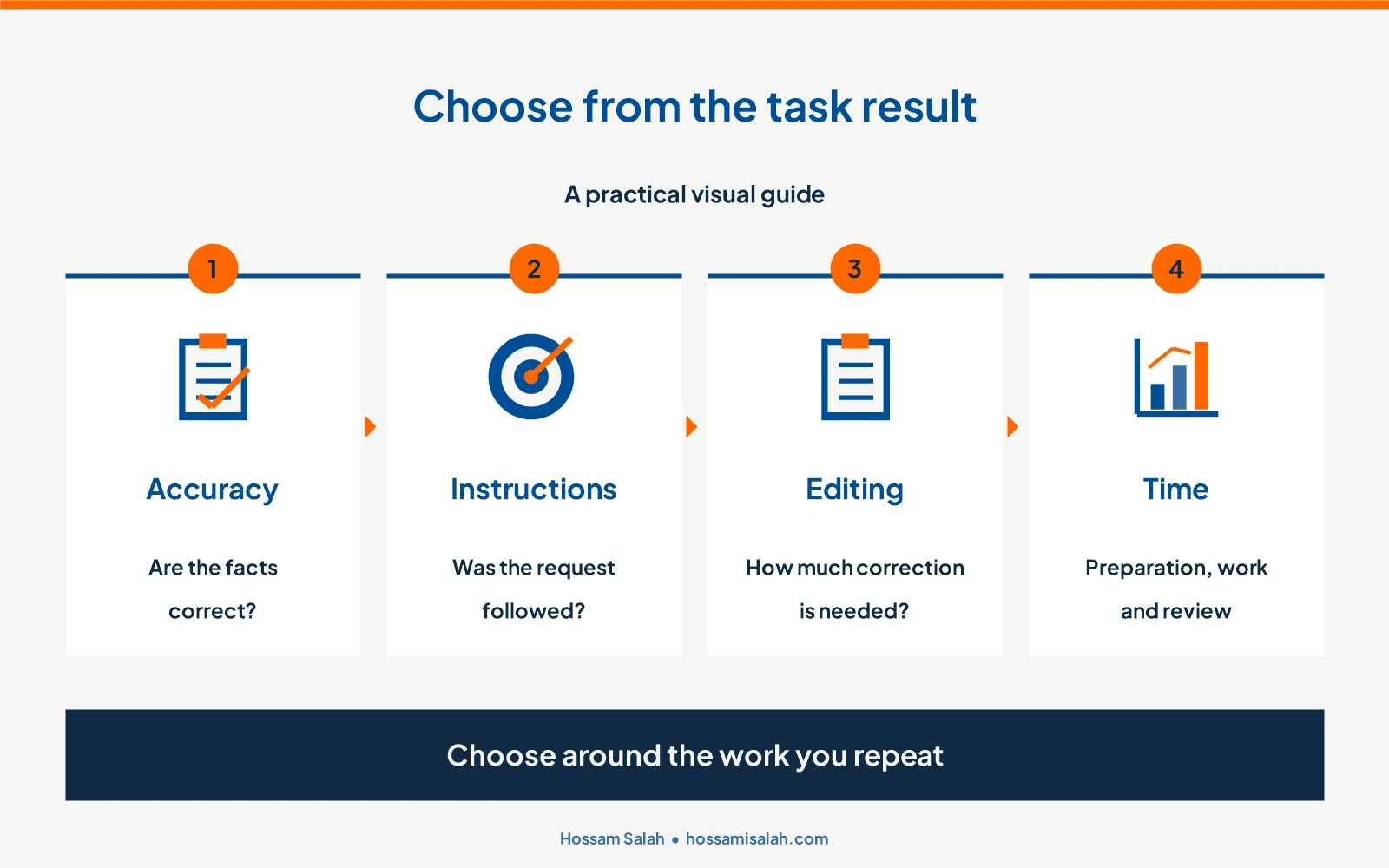
Rate accuracy, instruction-following, relevant language quality, editability and total time from one to five. Give each score a reason and treat factual correctness as a requirement before style preferences.
A higher score on one description does not establish superiority on all files or images. Repeat the exercise for work you actually perform and revisit the decision when your needs change.
Which should you start with?
If an existing workflow produces an appropriate result, keep using it until a specific gap justifies comparison. If you are new, test a small task on the plans available to you before paying for both.
If files and integrations matter, assess access, revisions and permissions in your account. If Arabic copy is central, give language quality and editing effort more weight. Choose around recurring work.
Frequently asked questions
Is Gemini more accurate than ChatGPT?
Accuracy depends on the question, evidence, model and tools. Compare a defined task and verify the facts rather than generalising across all uses.
Can I compare a free plan with a paid plan?
Yes, if those are the options your budget genuinely allows. Name the plans so that a feature difference is not attributed to the whole product.
Do I need both?
Use a second assistant when it adds a useful capability or review method. Repeating every request in two products can increase time without improving the deliverable.
Base the choice on your own work
Test your two most important tasks under matched conditions and record the review effort. The AI tools guide offers a broader selection framework.